

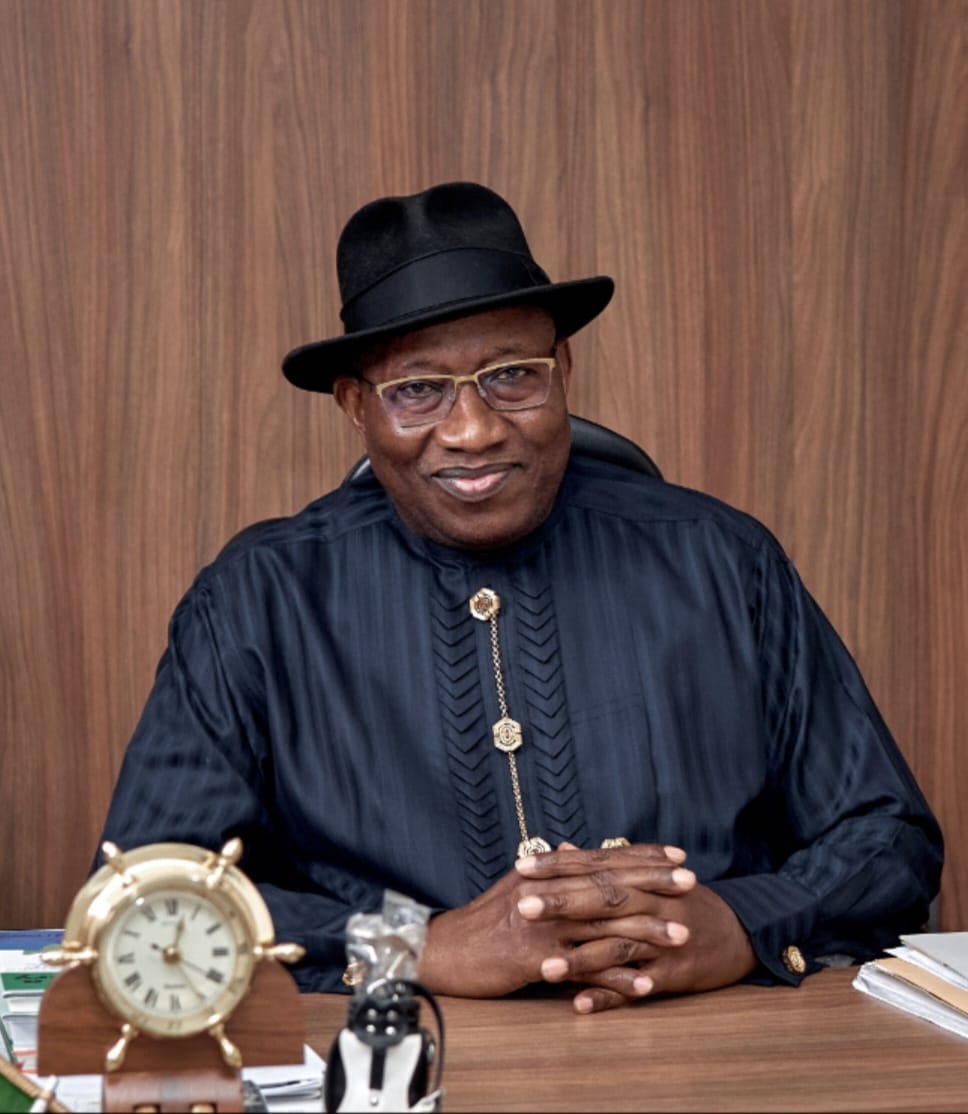

By Ikechukwu Eze On Friday, November 20, 2026, my boss, Dr. Goodluck Ebele Jonathan, GCFR GCON, President of the Federal Republic of Nigeria
By Ikechukwu Eze
On Friday, November 20, 2026, my boss, Dr. Goodluck Ebele Jonathan, GCFR GCON, President of the Federal Republic of Nigeria (2010-2015), will mark his 69th birthday. It is an appropriate moment to reflect on the life, leadership and enduring contributions of a man whose commitment to national development, democracy and peaceful coexistence continues to find expression beyond the shores of Nigeria.
For me, this occasion is more than a birthday celebration. It is an opportunity to celebrate a leader with whom I have had the privilege of working closely as media adviser and spokesperson for about a decade, and from whom I have learnt invaluable lessons about humility, intelligence, patience and the responsibilities of leadership.
My experience working with him has offered me a perspective beyond the protocols of public office. I have come to appreciate a statesman who listens, values different opinions, avoids unnecessary confrontation, forgives unconditionally and endlessly and believes that leadership should be defined by service rather than the trappings of power.
Given the enduring relevance and scale of Goodluck Jonathan’s achievements, it is hard to believe his presidency ended more than eleven years ago. President Jonathan’s administration pursued an ambitious development agenda spanning economic transformation, infrastructure, agriculture, education, power, aviation and institutional reforms.
By 2014 the size of the country’s economy under Jonathan stood at approximately $509 billion for 2013, the largest in Africa while attracting the highest foreign direct investment (FDI) on the continent, with a single digit inflation This reflected the changing structure and growing diversity of the Nigerian economy at that time. His administration also pursued power-sector privatisation, comprehensive railway development and the expansion of federal universities.
Particularly significant was his commitment to education as an instrument of national transformation. This conviction did not begin with his presidency. It was already evident during his tenure as Governor of Bayelsa State, when he prioritised educational development as a pathway to human empowerment and social advancement. He carried that philosophy into his presidency, where it became an important component of his national development agenda.
His administration established 12 new federal universities and two specialized institutions to expand access to higher education, constructed Almajiri schools across Northern Nigeria to integrate Western education into the traditional Islamic learning system, and pursued programmes to improve access to education for girls and other disadvantaged groups.
Another notable initiative was the Presidential Special Scholarship Scheme for Innovation and Development (PRESSID), designed to identify outstanding first-class graduates and sponsor their postgraduate studies at leading universities around the world, particularly in science, technology, engineering and other critical disciplines.
The underlying philosophy was clear: Nigeria’s development would depend not merely on physical infrastructure but on the quality of its human capital. Investing in education, nurturing exceptional talent and expanding opportunities for young Nigerians were investments in the country’s future.
These initiatives were consistent with his belief that an educated population is indispensable to economic growth, national competitiveness and sustainable development.
Another important dimension of Jonathan’s legacy is his contribution to Nigeria’s democratic development. His administration signed the Freedom of Information Act into law in 2011, strengthened the institutional framework for electoral administration and oversaw the 2011 general elections under the leadership of Professor Attahiru Jega as INEC chairman.
His tenure also witnessed the defining moment of the 2015 presidential election, when he conceded defeat and facilitated a peaceful transfer of power.
His memorable declaration that his political ambition was not worth the blood of any Nigerian captured a fundamental principle of democratic leadership: no political office is more important than the peace and stability of the nation.
That decision elevated the importance of peaceful political succession in Nigeria’s democratic experience and reinforced the principle that electoral competition should never become a justification for national instability.
Perhaps one of the most remarkable aspects of Jonathan’s public life is that his commitment to service did not end with his presidency.
Through the Goodluck Jonathan Foundation, he has continued to promote democracy, peacebuilding, good governance and sustainable development across Africa.
Similarly, through the West African Elders Forum, he has deployed his experience, relationships and influence to support mediation, peaceful elections and democratic stability in countries across the West African subregion.
His engagements in countries including The Gambia, Liberia, Sierra Leone and Senegal reflect his continuing commitment to dialogue, reconciliation and the peaceful resolution of political differences.
He has demonstrated that leaving political office does not mean retiring from public service. Rather, it can provide an opportunity to deploy the experience of leadership to advance the collective interests of a continent.
Beyond the policies, achievements and international engagements, I celebrate the man I have come to know through my working relationship with him.
Working as his media adviser and spokesperson has been a remarkable learning experience. His humility has taught me that authority does not require arrogance, just as intelligence does not require constant demonstration.
I have learnt a lot from his willingness to listen, his appreciation of thoughtful contributions and his preference for dialogue over confrontation.
His peaceful disposition has particularly shaped my understanding of leadership and public communication. I have come to appreciate that words can either build bridges or deepen divisions, and that those entrusted with communicating on behalf of leaders must always be conscious of the larger national interest.
At 69, Goodluck Jonathan represents an interesting chapter in Nigeria’s political and democratic experience: a former President whose engagement with national and continental development has continued beyond his years in office.
From his investment in education and human capital development to economic reforms, democratic institutions and the peaceful transfer of power, his presidential record provides important material for reflection and assessment.
His post-presidential activities through the Goodluck Jonathan Foundation and the West African Elders Forum have further extended his contribution to peace and democratic governance across Africa.
As he marks another year, I celebrate not just the former President, but the teacher, mentor and statesman whose example has reinforced my belief that the true measure of leadership lies not simply in the office one occupies, but in the values one upholds and the contributions one continues to make.
There is a lot to be grateful for; for the privilege of working with a sage, for the lessons in humility, intelligence and peaceful leadership, and for the opportunity to learn from a rich experience.
To this exceptional boss, I say: May the years ahead bring you continued strength, wisdom and fulfilment as you sustain your commitment to democracy, peace and the development of Africa.
Happy 69th Birthday, Your Excellency. May your enduring journey of service continue to inspire generations.
• Eze is the Special Adviser to Dr. Goodluck Ebele Jonathan