

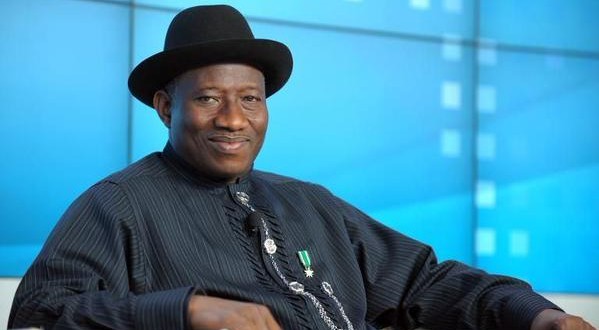

Former Minister and diplomat, Ambassador Bashir Yuguda, has issued a detailed response to recent public remarks by former Vice President Atiku Abubak
Former Minister and diplomat, Ambassador Bashir Yuguda, has issued a detailed response to recent public remarks by former Vice President Atiku Abubakar suggesting that the administration of former President Dr. Goodluck Ebele Jonathan was defined by “inexperience,” describing the claim as inaccurate, reductive, and inconsistent with Nigeria’s documented history.
In a statement made available to the media, Ambassador Yuguda acknowledged that the former Vice President Atiku Abubakar described Dr. Jonathan as a “decent man,” but cautioned that such recognition must not be overshadowed by assertions that misrepresent the former President’s record.
Ambassador Yuguda, who served under President Jonathan in multiple capacities, outlined the former President’s progression through critical leadership roles, including Deputy Governor, Governor, Vice President, Acting President, and ultimately President of the Federal Republic of Nigeria.
Highlighting key achievements during the Jonathan administration, Yuguda pointed to Nigeria’s economic expansion, including its emergence at the time as Africa’s largest economy, alongside improved investor confidence and relative macroeconomic stability.
“These were not accidental gains,” he noted. “They were the product of deliberate policy choices and disciplined implementation.”
The Ambassador also emphasized reforms in the agricultural sector, which he said helped improve food availability and earned Nigeria international recognition for progress in hunger reduction.
In infrastructure, he referenced the administration’s efforts to revive long-abandoned rail networks, describing them as critical to improving mobility and reducing the cost of transportation.
“I had the privilege of commissioning the rehabilitation of the Zaria–Gusau–Kaura Namoda rail line,” Yuguda recalled. “It was part of a broader commitment to restoring infrastructure that had been neglected for decades.”
On the international stage, Yuguda highlighted Nigeria’s strengthened diplomatic standing during Jonathan’s presidency, including the country’s election to the United Nations Security Council for two terms within a relatively short period.
“Nigeria’s voice carried weight globally,” he said. “Our engagements were strategic, and our leadership was respected across international platforms.”
Beyond policy achievements, Ambassador Yuguda underscored what he described as the defining hallmark of Jonathan’s presidency, his temperament and commitment to democratic values.
“Even under pressure, President Jonathan remained calm, respectful, and deeply committed to the unity of the country,” he said. “He consistently advised those of us in government to avoid unnecessary public confrontation and to uphold the dignity of public office.”
Yuguda stressed that this disposition was most evident during the 2015 general elections, which he described as a pivotal moment in Nigeria’s democratic evolution.
“Faced with security challenges and intense political contestation, President Jonathan chose the path of peace,” he said. “His decision to concede defeat without hesitation was not only historic—it fundamentally strengthened Nigeria’s democratic culture.”
According to Yuguda, that act of statesmanship continues to resonate both within Nigeria and across the African continent.
“He demonstrated that leadership is not defined by how power is acquired, but by how it is exercised and, ultimately, how it is relinquished,” he added.
The former Minister also commended Jonathan’s conduct since leaving office, describing him as a consistent voice for peace, institutional respect, and democratic consolidation.
“In and out of office, Dr. Jonathan has remained measured in speech and responsible in action,” Yuguda said. “At a time when political discourse is often heated, his restraint stands as a model of true statesmanship.”
While acknowledging that no administration is without its shortcomings, Yuguda cautioned against what he described as “revisionist narratives” that seek to diminish the legacy of past leadership.
“Constructive criticism is essential in any democracy,” he said. “But it must be grounded in fact, not convenience. Nigerians deserve an honest assessment of their history.”
He concluded by urging the public to evaluate leadership based on evidence and enduring contributions rather than retrospective claims.
“President Jonathan’s record is visible, documented, and enduring,” Yuguda stated. “It does not require embellishment, but it certainly deserves to be represented accurately.”
–
Below is the full text of statement:
DR. GOODLUCK JONATHAN, GCFR GCON: CELEBRATION OF A DECENT NATIONAL AND INTERNATIONAL STATESMAN, DEMOCRAT PAR EXCELLENCE
By Ambassador Bashir Yuguda
I have read with interest and, I must admit, some concern the recent comments credited to former Vice-President Alhaji Atiku Abubakar, suggesting that the challenges faced during the administration of President Goodluck Ebele Jonathan were the product of “inexperience.” It is important to acknowledge that, in thesame comment, the former Vice President was magnanimous enough to admit that Dr. Jonathan is a decent man.
Ordinarily, I would have chosen silence. Having served under President Goodluck Ebele Jonathan in different capacities, as Minister of State for Finance, Minister of State for Works, and Supervising Minister of National Planning, I am well aware of his disposition towards criticism. He consistently counselled restraint, urging members of his cabinet to show respect to past leaders and refrain from engaging in public altercations, no matter the provocation. That was his nature: measured, respectful, and deeply committed to preserving the dignity of public office.
That counsel has stayed with me. But there are moments when silence risks allowing a flawed narrative to harden into accepted history. This is one of such moments.
Having worked closely with President Jonathan across critical sectors of government, I find the label of “inexperience” not only inaccurate but difficult to reconcile with the facts. Before he ever took the presidential oath, he had traversed the full spectrum of executive leadership, Deputy Governor, Governor, Vice-President, and, at a delicate national moment, Acting President following the illness of Umaru Musa Yar’Adua of blessed memory. Those were not passive roles; they were defining experiences in governance at the highest levels.
From within the government, I witnessed a leadership style that was deliberate rather than dramatic, thoughtful rather than impulsive. Decisions were weighed, consultations were encouraged, and institutions were given room to function. That approach may not have satisfied those who equate leadership with constant spectacle, but it delivered results that can be independently verified.
During that period, Nigeria’s economic profile expanded significantly. The country attained the status of Africa’s largest economy, attracted strong investor confidence, and maintained relative stability in key indicators. Poverty levels declined to some of the lowest recorded since the return to democratic rule in 1999. These are not retrospective claims; they are outcomes documented by credible institutions.
In agriculture, the administration moved the conversation from subsistence to sustainability. Reforms in the sector improved food availability and earned Nigeria global recognition for progress toward hunger reduction targets.
The Jonathan administration revived train routes all over Nigeria to provide an inexpensive alternative to road and air travels. On behalf of the President, I personally commissioned the rehabilitation and restoration of the Zaria-Gusau-Kaura Namoda rail line which rutted over time following 26 years of neglect.
Those of us in government at the time understood that these gains were the result of focused policy execution, not happenstance.
My experience in the diplomatic arena, having previously served as Nigeria’s ambassador to the United Arab Emirates (UAE) and Qatar, further reinforces this perspective. Nigeria’s voice carried weight internationally during President Jonathan’s tenure. The country secured two terms on the United Nations Security Council within a relatively short span, an indication of diplomatic goodwill and strategic engagement. Equally noteworthy was President Jonathan’s role in the emergence of Akinwumi Adesina as President of the African Development Bank, a historic breakthrough for the nation. It is for all these and his endless diplomatic shuttles that Jonathan has continued to bag awards and international recognitions as a great symbol of peace and democracy not only in Africa but globally.
Yet, beyond statistics and milestones, what defined President Jonathan for many of us who served with him was his temperament. He possessed a calmness that steadied governance, even in moments of pressure. I recall numerous occasions when he would discourage any attempt by his appointees to respond sharply to critics, including former leaders. His position was clear: leadership must not descend into unnecessary confrontation.
That disposition was consistent with the loyalty he demonstrated to his own principal, Umaru Musa Yar’Adua of blessed memory. Even in trying times, he upheld the dignity of that office and the sanctity of that relationship. Even as former President he has continued to visit his successors including President Bola Ahmed Tinubu to consult them on important national and sub-regional issues. It is a standard worth reflecting on, especially when contrasted with the well-known strains that existed between Vice-President Atiku Abubakar and President Olusegun Obasanjo during their time in office.
No leader is beyond criticism, and President Jonathan himself would be the first to acknowledge that he is human and capable of error. But to reduce his presidency to a question of inexperience is to overlook both the depth of his preparation and the substance of his record.
His most enduring legacy, in my view, lies in his respect for democratic values. Despite the security challenges at the time of the 2015 elections, Jonathan did not offer that as an excuse to prolong his stay in office. He did not only ensure that elections were conducted even in areas with the most difficult security challenges, he also pioneered the deployment of technology, to enhance the transparency and credibility of the electoral process. It is obvious that at a critical juncture, he chose the path of peace, conceding power without hesitation and reinforcing the principle that the stability of the nation outweighs personal ambition. That decision alone altered the trajectory of Nigeria’s democratic culture in a profound way.
President Jonathan has remained consistent even out of office, measured in speech, respectful of institutions, and disinclined toward inflammatory commentary. In an era where political discourse is often heated, that restraint is not weakness; it is statesmanship.
Ultimately, Nigerians will judge based on evidence, not assertions. They can differentiate between leadership that left tangible footprints and narratives that seek, after the fact, to redefine it. President Jonathan’s contributions are visible, documented, and enduring.
They do not require embellishment, and they certainly cannot be diminished by revisionist claims, especially by one whose claim to experience in the last two decades has remained an unrealised ambition to be elected President of our great country.
Let me end with this thought: we must reflect on what might have become of our nation’s democracy if those who now criticize Jonathan had found themselves in his position when his former boss, Yar’Adua, of blessed memory fell ill. Would they have acted with the same wisdom, decorum, and restraint that Jonathan demonstrated in the interest of preserving the nation’s fragile democracy, or would personal ambition have driven them to destabilize it?
Lastly, we thank God for His blessings and for sparing the life of Dr. Goodluck Jonathan who was once a young man but now President of the Federal Republic of Nigeria (2010-2015), a highly celebrated national and international statesman.
*Ambassador Bashir Yuguda CON is Nigeria’s former Minister and former Nigeria’s Ambassador to the United Arab Emirates (UAE) and Qatar.